Pickup and delivery laundry: how it works, step by step
How a pickup-and-delivery laundry works from the customer's booking to the return trip: zones, time slots, drivers, washing, tracking and the costs behind it.
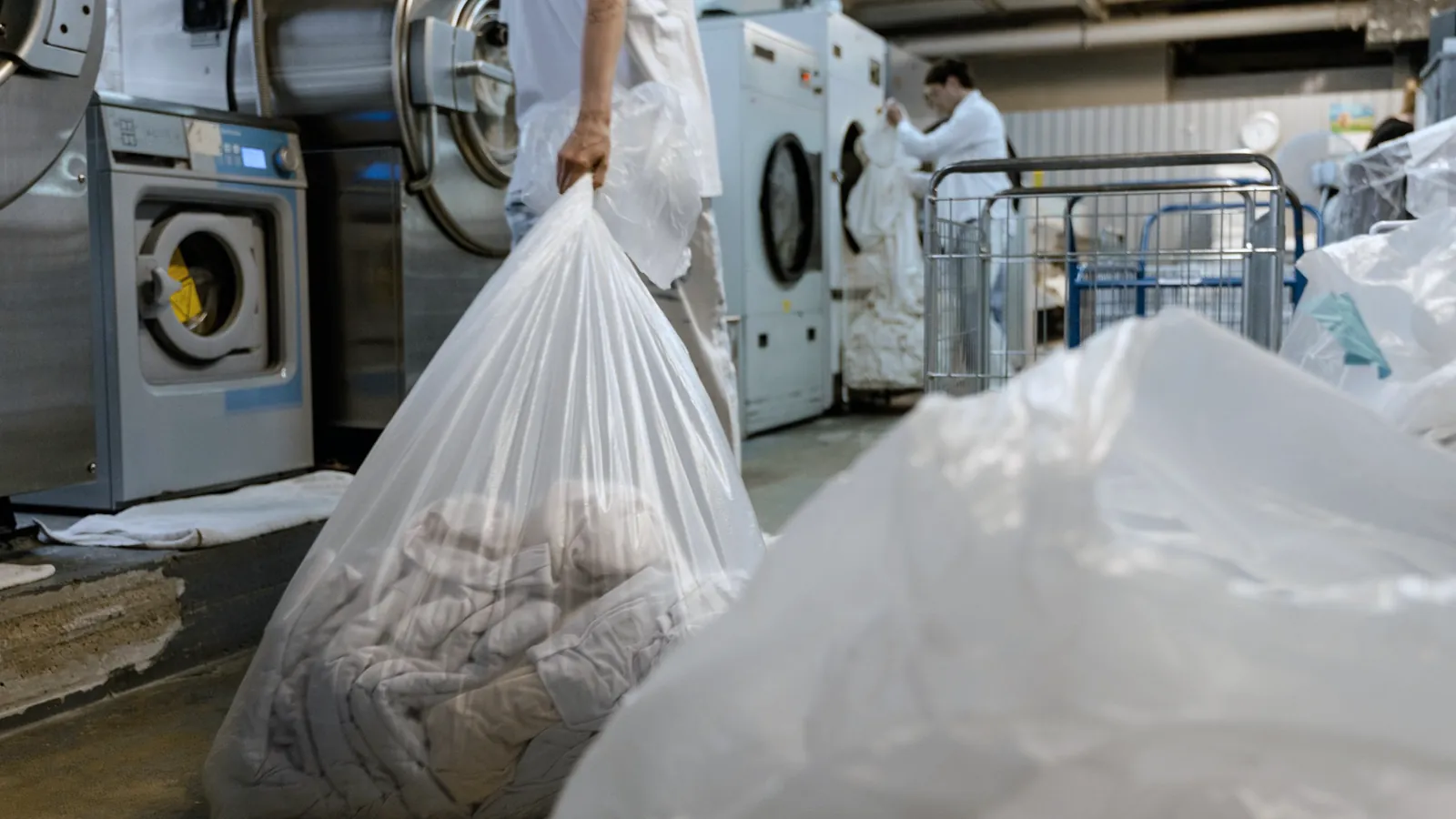
A pickup-and-delivery laundry lets customers book online, sends a driver to collect their clothes at a chosen time, washes and folds them at a laundry, and returns them clean to the same door. The business earns by charging for the washing plus a price that covers the two driver trips.
Here is the whole flow from both sides, the customer's and the owner's, and where owners usually lose money.
What happens from booking to delivery?
- Booking. The customer enters an address, picks a service and a pickup window, and pays or saves a card.
- Pickup. A driver collects the bag at the window, marks it picked up, and notes anything unusual.
- Wash. The laundry sorts, tags, washes, dries, folds or presses, and checks each order.
- Delivery. A second window is agreed; the driver returns the order and marks it delivered.
- After. The customer gets a message, and the owner records the order and the customer for next time.
Routific describes the same model: you collect, clean and return customers' laundry, and it can run from a laundromat or from an industrial facility that may have lower rent. For delivery, it recommends accurate time windows, customer updates and proof of delivery such as signatures or photos (Routific).

Who washes the clothes?
There are three setups: you wash in your own plant, you wash in a shop you already run, or you pay a partner laundry to wash. A partner keeps equipment cost low, but quality and margin are partly in someone else's hands. Pick the setup before you design anything else.
How do zones and time slots work?
A zone is a group of postcodes or neighbourhoods. For each zone you decide which days and windows are open, and how many pickups and deliveries fit in each. One place is one pickup or one delivery. The customer types an address, and the booking page shows only windows that exist for that zone.
At HolaWash, a laundry in Barcelona, we learned that capacity belongs to the zone, not to a driver. Drivers come and go. Zones stay.
Dense zones make money. Every extra kilometre between stops is cost you cannot recover. Start with one or two zones and widen only when they run full. See the nine steps to start a laundry delivery business for a zone grid.
What does a driver need?
A time-ordered list of stops, the address and phone number for the current stop only, a way to mark picked up and delivered, and a way to say "customer not in". Decide the no-show rule before you open: one free retry, or a fee stated at booking. Employ or contract drivers in a way that is legal where you are.
What does it cost the owner?
Four costs matter: the driver stop (twice per order), washing and finishing, packaging and bags, and software. If the minimum order does not pay for two stops, every small order loses money. That is why many delivery laundries set a minimum order and a delivery fee. Read how to price laundry services.
What can go wrong?
- Missed windows. Promise windows you can keep.
- Lost items. Tag every bag at pickup and photograph unusual garments.
- Disputes. Publish a clear damage and lost-item policy and check your insurance for goods in transit.
- Stops far apart. Cap your zone, not your ambition.
- No customer list. If orders come only through a platform, the customer is not yours. See own app or marketplace.
Does it work in the Gulf?
The model fits cities where customers are busy and housing is dense, such as apartment towers in Dubai or Riyadh, short-let apartments and small hotels. Licence rules matter: in Saudi Arabia a Ministry of Municipal, Rural Affairs and Housing draft reported in January 2024 said that pickup-and-delivery laundries need a central laundry tied to the activity or a contract with a licensed one, and that delivery vehicles must be licensed (Al Watan). It was a draft, so verify the final text on the Balady platform. See laundry licences in the UAE, Saudi Arabia and the UK.
What should I do next?
Pick one zone, write the windows, price one stop, and run three test pickups with your own clothes. Then use the calculator to test your prices, read the LaundryFuture Academy, or book a 20-minute call if you already run a laundry and want booking and driver tools set up.
FAQ
How does a pickup and delivery laundry make money?
By charging for the cleaning plus a price or fee that covers the pickup and the return trip. If the order is too small to cover the two stops, it loses money, so owners set a minimum order.
How long does a laundry delivery take?
It depends on the service you promise. Many offer next-day or 24 to 48 hours, but only promise a time you can keep every time.
Do I need my own laundry plant?
No. You can use your own shop, or a partner laundry. A partner lowers start-up cost but gives you less control over quality and margin.
Do I need an app?
Not at the start. A booking page, a customer list and a driver list are enough for the first orders. An app helps once you have repeat customers.
Is pickup and delivery cheaper to start than a laundromat?
According to one US guide, yes: about $10,000 to $50,000 versus $200,000 to $500,000 or more. Your figures will differ by country and setup.
Sources (checked 13 Nov 2026)
- Free sampleThe foreword and two full chapters of the book, by e-mail.
- The book · €29Never Rent a Customer: 13 chapters and a 90-day launch plan.
- Book a 20-min call20 minutes with Talal, with the system running live.
Related articles
- 12 min read
10 mistakes laundry owners make that cost money from day one
Ten costly mistakes in new laundries, from expanding too fast to counting map taps as sales. What each costs, and how to avoid it, from a working owner.
- 11 min read
How to open a laundry in 2027: costs, steps, hidden traps
How to open a laundry in 2027: pick a model, price it with real quotes, check the building, size your machines and avoid the traps most owners meet.
- 10 min read
Laundry supplies list: machines, chemicals, hangers, packaging
What a laundry needs to buy: machines, chemicals, dosing, hangers, garment covers, bags and tags, with sourced prices and the supplier traps to avoid.