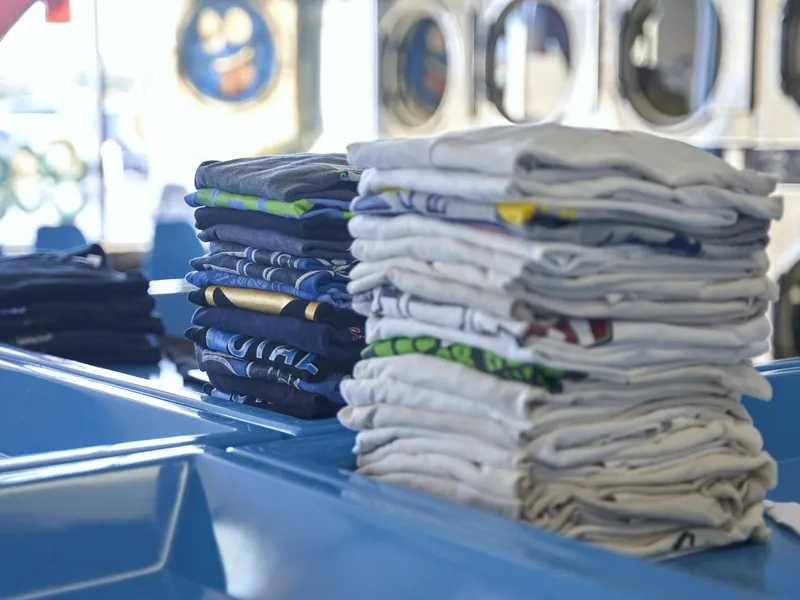
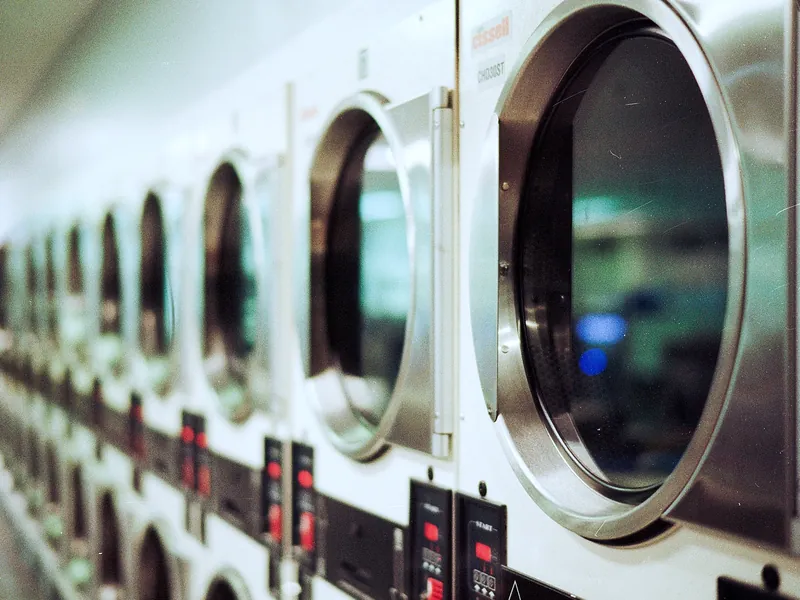
Laundry supplies list: machines, chemicals, hangers, packaging
What a laundry needs to buy: machines, chemicals, dosing, hangers, garment covers, bags and tags, with sourced prices and the supplier traps to avoid.
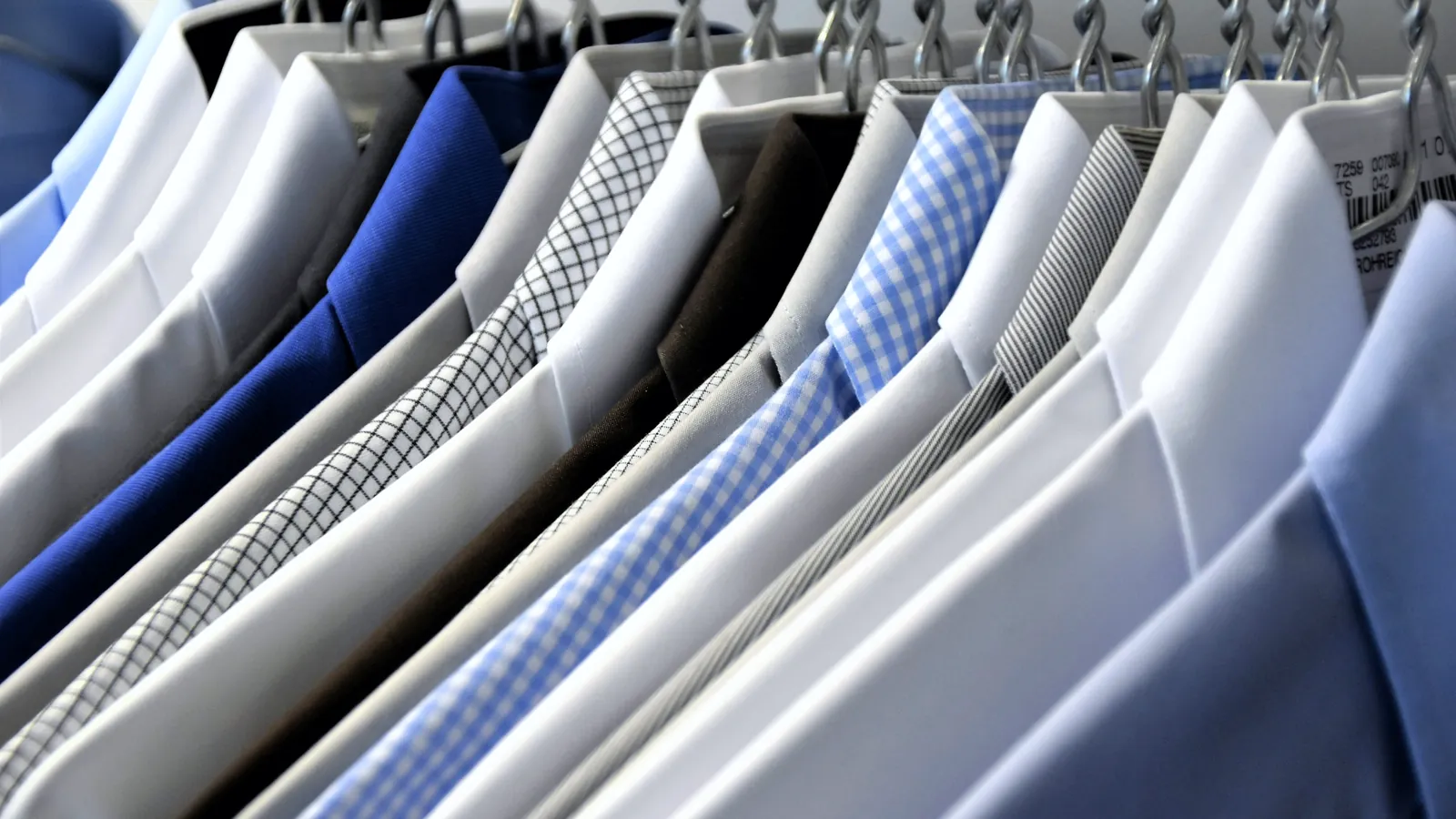
A laundry needs five groups of supplies: machines (washer-extractors, dryers, an ironer and finishing equipment), chemicals (detergent, booster, bleach, softener and stain products), dosing equipment, hangers and garment covers, and customer packaging (bags and tags). Chemicals, hangers and film are small purchases that you repeat every week. If you run out, production stops.
I am Talal Junaid. I run a pickup-and-delivery laundry in Barcelona and built LaundryFuture, laundry software, from what we use. This list is general: it covers what any laundry buys, with sourced prices and the traps suppliers rarely mention. Learn from someone who already did it, rather than from mistakes that cost you money.
What supplies does a laundry need?
This table is the whole shopping list. The sections below give the detail.
| Group | What to buy | Buy once or repeat? |
|---|---|---|
| Machines | Washer-extractors, dryers, flatwork ironer, ironing tables, steam generator | Once (plus service) |
| Chemicals | Detergent, wash booster, degreaser, fibre protector, bleach, softener, spotting products | Repeat weekly |
| Dosing | Pumps and lines that measure chemicals into each wash | Once |
| Hangers | Wire, plastic or padded hangers, shoulder shapers | Repeat |
| Garment covers | Clear film rolls or poly bags | Repeat |
| Customer packaging | Laundry bags with your logo, bag ties | Repeat |
| Tags and labels | Tag printer and rolls, pins or heat-seal tags | Repeat |
| Shop and van | Folding tables, carts, shelving, scales | Once |

Which machines does a laundry need?
You need washers, dryers and finishing equipment sized to the kilos you process per day. Start from your daily volume, not from a catalogue. How to open a laundry in 2027 shows how to work backwards from kilos to machines.
- Washer-extractors. A commercial washer that also spins at high speed. Spin speed matters because water left in the load must be dried by the dryer. One 14 kg professional model reaches a G-factor of 450 and 45 percent residual moisture, and a full load of 14 kg on a 60 °C eco programme runs for about 60 minutes with 86 litres of cold water and 5 litres of hot.
- Dryers. Drying is usually the bottleneck. Trade guidance says to keep at least 1 to 1.1 of drying capacity for each unit of washing capacity. Ask every seller for the cost per cycle on gas, electric and heat pump.
- Flatwork ironer. Needed if you wash sheets and towels for hotels and gyms. A 800 mm cylinder ironer from one maker runs up to 45 m/min, but ask for kilos per hour of your own linen type.
- Finishing. Ironing tables with a steam generator, and a shirt finisher if shirts are your regulars.
- Dry-cleaning or wet-cleaning machine. Only if you really sell it. See the solvent notes below.
Brands that appear in dealer quotes and catalogues include Electrolux Professional, Girbau and Miele Professional. This is a list of market examples, not an endorsement.
How much do commercial washers cost?
A dealer price list shows 14 kg rigid-mount washers at about €6,415 to €6,485 and 18 kg at about €7,290 to €7,385. The list is undated, so use it as an anchor and ask for current written quotes. In the US, one guide gives $1,500 to $6,500 for washers and $600 to $5,000 for dryers. That site is a low-reliability source, so treat it as a rough range only.
Should you save energy on the machines?
Yes, because water heating is most of a wash's energy. A residential energy model puts 80 to 85 percent of the energy per wash into heating the water. Washing at 20 °C instead of 60 °C cut electricity by about 70 percent on a typical household machine. Hygiene needs still decide the temperature for linen from hotels or healthcare. Full loads also use less energy per kilo than half loads.
Which chemicals does a laundry buy?
A professional order has six product types. Names vary by supplier, but the set is standard:
| Product | Typical pack | What it does |
|---|---|---|
| Neutral liquid detergent with enzymes | 20 l | Main wash |
| Alkaline wash booster | 22 kg | Boosts cleaning on soiled loads |
| Degreaser or wetting agent | 20 l | Greasy soil, food stains |
| Fibre protector | 20 kg | Protects fabric over many washes |
| Liquid oxygen bleach | 25 kg | Whitening without chlorine |
| Concentrated perfumed softener | 25 kg | Finish and scent |
On a 2026 Spanish distributor price list, these drums cost between €41 and €159 each (excluding VAT) depending on the product. Prices differ by country and volume, so get at least three quotes.
What does the wash chemistry cost per kilo?
A 2023 Spanish dealer cost sheet assumed about €0.053 per kilo of laundry for detergent and softener in self-service washers. That was for one set-up and one year, so use it only as an order of magnitude. I could not find an independent cost-per-kilo figure for wash-and-fold or pickup-and-delivery plants. Measure your own: drums bought per month divided by kilos washed.
Is automatic dosing worth it?
Often yes, because overdosing wastes product. Vendors claim savings, and these are claims, not independent tests. Electrolux says its dosing system saves up to 40 percent of detergent and that overdosing can waste up to 25 percent. Hydro Systems claims up to 20 percent. Test it yourself: record the drums you use for a month before and after.
What about dry cleaning solvents and stain removal?
Spotting agents are part of every dry-cleaning and wet-cleaning system. For dry cleaning, check your local solvent rules before you buy a machine. A public-health review calls professional wet cleaning the safest current alternative to perchloroethylene. In the US, an EPA rule bans all PCE dry-cleaning uses after 19 December 2034. Wet-cleaning systems need their own detergents, conditioners and pre-spotters, so budget for those too.
What hangers does a laundry need?
You need hangers for every shirt, suit, dress and jacket you return on a hanger. Buy by the box, and compare the price per hanger, not per box.
| Hanger | Price | Per hanger | Source |
|---|---|---|---|
| Wire shirt hanger, 18 inch, white | $85 to $90 per 500 | about $0.17 to $0.18 | Uline, US list price |
| Tubular plastic hanger, 17 inch | $70 to $73 per 144 | about $0.50 | Uline, US list price |
| Padded braided hanger, 40 cm | €43 per 500 (excl. VAT) | about €0.09 | A 2026 Spanish distributor price |
I found no independent test showing which hanger prevents shoulder marks, so I will not claim one does. Ask for a sample and try it on your own garments.
What do you use to cover garments?
Clear film protects clean garments on a hanger. You buy it as bags or as a tubular roll.
- Poly garment bags. A 72-inch bag in a 500-pack costs $105.99 at Zoro, about $0.21 each. That is a US list price.
- Tubular film roll. A 2026 Spanish distributor price for a 62 cm roll of clear film, gauge 100, 70 percent virgin plastic, 20 kg, was €84 excluding VAT.
Prices depend on thickness and recycled content, and plastic packaging rules differ by country, so ask the seller what is in the price.
What bags and tags do customers see?
Customer bags are your brand in the customer's hand. You can buy them from a local printer or order direct from a factory.
A typical 2024 factory quote for a zip-top laundry bag, 43 × 30 × 30 cm, with a two-colour logo, in a run of 5,000, was USD 1.17 for a 100 g non-woven bag or USD 1.47 for 600D polyester, ex-works Guangzhou. The terms were a refundable sample at USD 100, 25 to 28 days of lead time after sample approval, and payment of 40 percent upfront and 60 percent before delivery. Add freight, import duty and your own storage. Factory orders need cash and patience: if you run out of bags, you cannot wait four weeks.
For tags, a tag printer and rolls are the common choice. A Spanish distributor in 2026 priced 8 rolls of 90 × 80 × 12 mm at €17.20 excluding VAT. I could not find reliable European prices for shirt boxes, collar inserts, tissue or heat-seal tags, so get quotes.
Where do laundries buy supplies?
Machine makers and distributors sell chemicals, parts and consumables. The list below is a starting point with links. A listing is not an endorsement.
| Region | Supplier type | Examples |
|---|---|---|
| Spain / EU | Machines, dosing, chemicals | Electrolux Professional, Girbau, Miele Professional |
| Spain / EU | Cleaning chemicals | Bunzl Spain catalogue, directory of industrial laundry detergent suppliers |
| UK | Autodose chemicals, supplies | Gompels |
| US / UK | Hangers, garment bags | Uline |
| Marketplace | Hangers and bags direct from factories | Alibaba storefronts, for example this one |
For the UAE and Saudi Arabia I found no verified wholesale supplier of hangers, covers or chemicals. Ask the local distributors of the machine brands, and check Yellow Pages UAE as a starting directory.
What do suppliers not tell you?
Four traps cost owners money:
- "Free" dosing pumps come with a catch. Free pump installation and service often require you to buy that supplier's chemicals for a contract period. Another offers systems free on loan to qualifying volume users, and the qualifying volume is the real price. Ask in writing: contract length, minimum volume, who owns the pumps and what leaving costs.
- Machine leases can be rigid. Some leases contain "hell or high water" clauses: you keep paying whatever happens to the machine. Check who pays repairs, the cost of early termination, whether the lease can pass to a buyer if you sell the business, and whether the lessor is a finance company or the vendor. I could not find typical lease costs or termination fees in public sources.
- Minimum orders and freight. One dealer's 2023 terms gave free carriage only above €600 or three units, and no crane for washers of 40 kg or more. Returns needed authorisation and a 5 percent handling fee. Read the terms before you order.
- Running out. If you run out of detergent or film, production stops. Keep two weeks of stock and a second supplier.
How do I buy supplies without wasting money?
- Write your weekly use of each item: drums, hangers, film, bags.
- Get three quotes, with delivery, minimum order and payment terms.
- Buy a small first order and test on real garments.
- Track cost per kilo for chemicals and cost per garment for hangers and film.
- Re-order when stock hits two weeks, not zero.
Your laundry software should also tell you what you are making per order, so you can see if supply costs eat the margin. If your current laundry software cannot show that, see how to switch laundry software.
FAQ
What supplies do I need to start a laundry?
Machines, chemicals, hangers, garment covers, customer bags, tags, and equipment for the shop and van. Machines are the largest one-off cost. Chemicals, hangers, film and bags are the weekly purchases.
What chemicals does a laundry use?
A standard set is a neutral enzyme detergent, an alkaline booster, a degreaser or wetting agent, a fibre protector, an oxygen bleach and a concentrated softener. Add spotting agents if you handle stains, and special products if you wet clean or dry clean.
How much do laundry hangers cost?
Published prices range from about $0.17 each for US wire hangers, to about $0.50 for plastic tubular hangers, to about €0.09 for padded hangers in a 2026 Spanish distributor price. Prices depend on volume and country.
Do I need an automatic dosing system?
It is not required, but vendors say it cuts waste. Electrolux claims up to 40 percent detergent savings, and Hydro Systems up to 20 percent. These are vendor claims, so test them on your own plant before you commit to a supplier contract.
How much stock of supplies should I keep?
Two weeks of detergent, film, hangers and bags is a safe rule, with a second supplier for each. Running out stops production.
Where can I buy laundry supplies?
From machine makers and their dealers, from chemical distributors, from catalogue sellers such as Uline for hangers and garment bags, and from factories on marketplaces for custom bags. Compare price, minimum order, delivery and payment terms.
What should you do next?
Make your list from the first table, add your weekly use, and ask three suppliers for written quotes. The Academy has the plant book with the checklists: see the LaundryFuture Academy. To talk through your own setup, or see how LaundryFuture replaces your current laundry software, book a 20-minute call with me. To avoid the costly errors, read 10 mistakes laundry owners make.
Sources (checked 17 Nov 2026)
- Free sampleThe foreword and two full chapters of the book, by e-mail.
- The book · €29Never Rent a Customer: 13 chapters and a 90-day launch plan.
- Book a 20-min call20 minutes with Talal, with the system running live.
Related articles
- 4 min read
How to price laundry services: per kilo, per bag or per item
A cost-first method to price laundry and dry cleaning: cost of one stop, cost of one bag, minimum order, and when to charge per kilo, per bag or per item.
- 6 min read
Laundry CRM: what to track every morning in 10 minutes
What a laundry CRM is, the five numbers to check each morning, the segments that earn money and the rules that keep your data clean. From a working laundry.
- 12 min read
10 mistakes laundry owners make that cost money from day one
Ten costly mistakes in new laundries, from expanding too fast to counting map taps as sales. What each costs, and how to avoid it, from a working owner.